Mahdi Elm
 The Carry-On List That Covers a Week
There’s a particular smugness reserved for the traveller who breezes past the baggage carousel while everyone else stands hypnotised by the belt. It isn’t luck. It’s a packing method built on ruthless editing, an obsession with layering, and a quiet respect for the cabin size sticker at the check-in desk. A week away with only a carry-on isn’t a stunt, and it certainly isn’t about wearing the same shirt for seven days. It’s about choosing pieces that multiply, liquids that behave, and a bag shaped to survive the sizer at gate B34 in Stansted at six in the morning when the staff are in no mood for negotiation.
Choosing the Bag Before You Choose the Clothes
Start with the shell, not the contents. The bag dictates everything else, and the strictest airlines — Ryanair, Wizz, and increasingly the Asian low-cost carriers — have quietly shrunk the acceptable cabin size to around 40 x 20 x 25 cm for anything you want to bring on for free. A 55 x 40 x 20 cm cabin case still works for most legacy carriers, but if you’re flying mixed itineraries, size down. Check your airline’s exact allowance against IATA’s cabin baggage guidance before you commit to a shell, because a two-centimetre overhang at the gate can cost more than the flight itself.
Soft-sided bags flex under the sizer in a way hard shells never will, which is why you’ll spot seasoned Berliners in Tegel’s replacement airports slinging tote-shaped duffels through security while the wheelie crowd sweats. Choose a bag with a flat back panel, a front laptop sleeve for the security tray shuffle, and internal compression straps. The compression straps are non-negotiable — they’re what turn seven days of clothes into something the size of four. A separate packing cube for laundry keeps clean and worn separated by day three, when the distinction starts to matter.
The Seven-Day Clothing Formula
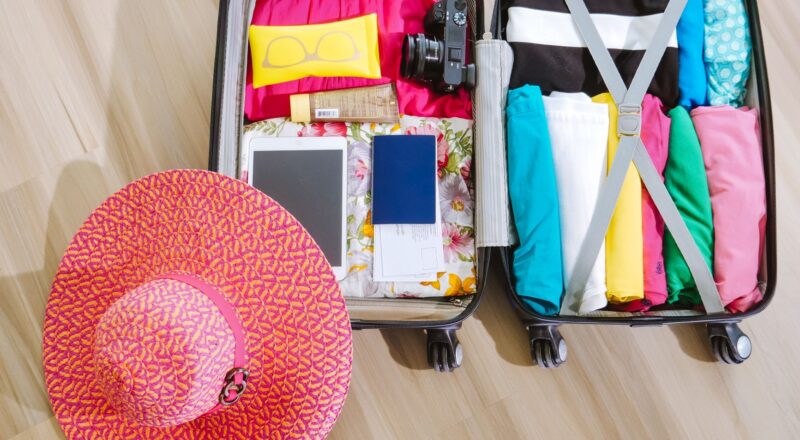
Build the wardrobe around a colour spine of two neutrals and one accent. The classic ratio is three tops, two bottoms, one dress or overshirt, one warm layer, and one waterproof, plus what you wear on the plane. That’s it. Everything must pair with everything else, and everything must survive a sink wash in a Lisbon guesthouse at eleven at night, dry by the time you’re eating pastéis de nata in Belém the next morning.
Merino wool does the heavy lifting here. Two merino t-shirts and one long-sleeve will carry you through a week of walking, dinners, and unexpected weather without complaint. Add a linen or cotton shirt for warmer afternoons, dark trousers that read equally well in a museum queue and a wine bar, and a pair of jeans or a skirt depending on your leanings. Shoes are the tyrant of any carry-on — wear the bulkier pair on the plane and pack one flatter alternative. A packable puffer compresses to the size of a mango and covers everything from Reykjavík evenings to over-air-conditioned Bangkok metros. If you need more strategic detail on longer stretches, the packing essentials for long trips breakdown goes deeper into rotation systems that build on this same base.
Liquids, Tech and the 100 ml Puzzle
The liquid rule is where most carry-on ambitions collapse. One clear resealable bag, containers of 100 ml or less, everything visible at security. The upgraded scanners rolling out across European and North American airports are slowly easing this, but until the rules are officially harmonised, pack as if the old rules apply — the TSA’s liquid guidance remains the safest baseline for anyone flying transatlantic.
Decant everything. Shampoo, conditioner, moisturiser, sunscreen — all into 60 or 100 ml silicone bottles labelled with tape. Solid alternatives eliminate the problem entirely: shampoo bars, solid perfume, toothpaste tablets, a bar of laundry soap the size of a matchbook for those sink washes. Contact lens users, split your solution across two smaller bottles rather than gambling on one 100 ml being counted generously.
Tech deserves its own small pouch. One universal adaptor, a compact GaN charger that handles laptop and phone from a single plug, a short braided cable, and a power bank under 100 Wh (anything larger is banned from the cabin outright). A pair of wired earphones as backup for when the wireless ones die halfway through a delayed layover in Doha at three in the morning is the sort of small redundancy that separates smooth trips from miserable ones. Everything tech-related lives in one pouch, pulled out once at security, replaced once at the gate.
The Bits Everyone Forgets Until They Need Them
Small items win weeks. A microfibre travel towel weighs nothing and rescues you from beach days, sudden rain, and hostels that charge for linen. A silk sleep liner takes up less space than a paperback and lets you sleep on any surface with dignity intact. Two spare resealable bags handle wet swimwear, leaking bottles, and the inevitable stone you picked up from a beach in Cefalù that seemed meaningful at sunset.
A slim document wallet holds passport, one backup card kept separate from your daily wallet, printed copies of key bookings for the border officer who still wants paper, and a pen that works — Schengen entry forms and US customs cards still exist in physical form, and borrowing a pen from the passenger behind you is a small humiliation easily avoided. Medication in original packaging with a printed prescription photo on your phone. A collapsible water bottle for after security. Earplugs, an eye mask, and a scarf that doubles as a blanket on flights where the crew have decided blankets are a luxury item.
The carry-on week isn’t about deprivation. It’s about the strange freedom of arriving in Porto or Palermo or Prague with everything you need slung over one shoulder, walking straight from the terminal into the city while the taxi queue debates which lane is shorter. The bag becomes a habit, then a preference, then the only way you want to travel — and the world quietly opens up faster than you thought it would.